

- Mesh count alone specifies nothing: an 18 by 16 fabric and an 18 by 18 fabric with different wire diameters can differ in aperture by a third, and aperture is what excludes an insect.
- Open area computed from the weave is a geometric figure, not a ventilation rate; the frame, the overlap and the boundary layer all take a further share, and a natural ventilation strategy that ignores the screen will under-ventilate.
- A screen is a permeable plane outside the weather seal, so it wets, catches grit and drains onto whatever is below it; if the screen track sits under the sash drainage path, the screen becomes the reason the window leaks.
- Mill-finish aluminium mesh is the default in cheap quotations and the wrong default on a coast, where the mesh is the thinnest, most exposed aluminium in the assembly and the first place chloride shows.
- A fixed screen changes an escape opening into a two-action opening unless the screen is designed as part of the escape, and this is decided on the schedule, not on site.
- Screen performance is specimen-specific in both conformity regimes: a screen added after the window was classified sits outside the tested configuration, and a screen supplied with it is part of the product.
- The screen is the only part of the opening with a cleaning interval, so if it cannot be removed without tools it will not be cleaned, and an uncleaned screen becomes a salt and dust reservoir against the frame.
1. A Screen Is a Second Facade, and It Is Always Specified Last
Every other component of a window is chosen while the price is still open. The screen is chosen afterwards, by whoever is filling in the accessory column, usually on the basis of what the supplier calls standard. That sequence is why screens are simultaneously the cheapest item on a fenestration package and the most common source of a client complaint in the first summer of occupation.
The component itself is simple: a woven or non-woven plane held in a frame, mounted outside the operable sash. What it does to the opening is less simple. It is a permeable surface in front of the weather line, so it intercepts wind, rain, insects, sand, leaves and solar radiation before any of those reach the sash gasket, and it holds a film of water and a bed of grit against the frame after the weather has passed. It changes the pressure field across the opening, adds a layer of still air on the exterior face of the glass, and reduces the effective free area of every opening it covers. None of that appears on a window schedule.
Three markets drive the specification and each asks for something different. In mosquito and sand-fly regions the screen is a health item and the aperture is the specification. In Gulf and Sahel conditions it is a sand and dust item, where no practical mesh stops the fine fraction and the real requirement is a screen that can be cleaned and a window that stays sealed. On coasts it is a corrosion item, because the mesh is the thinnest aluminium in the assembly and the most continuously wetted. In all three the screen is judged by whether it is still intact, still running and still cleanable after a few seasons, which is a question about wire, frame and track rather than about the window.
This guide works through those three variables in order, then through the interactions that catch projects out: drainage, daylight and solar, ventilation, acoustics, escape openings, conformity, and the handover practices that decide whether the screen survives the last week of construction.
2. Mesh Geometry: Count, Wire Diameter and the Open Area You Are Actually Buying
Mesh is sold by count, which is the number of wires per inch in each direction, and bought by aperture, which is the clear gap between adjacent wires in millimetres. The two are related only through the wire diameter, and that is where quotations diverge without anybody noticing. Two fabrics both described as 18 mesh can have apertures differing by a third if one is woven from 0.23 mm wire and the other from 0.33 mm, and it is the aperture that decides whether a mosquito reaches the room.
For a plain square weave the arithmetic is short. The fraction of the surface that is open is the product of the open fraction in each direction, and each direction's open fraction is one minus the wire width per unit length:
open area ≈ (1 − count × wire diameter ÷ 25.4)²
Applied to fabrics that appear in real specifications, the spread is large enough to change a decision:
| Nominal weave | Wire diameter | Clear aperture | Open area | Behaviour |
|---|---|---|---|---|
| 14 × 14 per inch | 0.40 mm | about 1.4 mm | about 61% | Good airflow and vision; excludes larger flies, not the smaller biting species |
| 18 × 16 per inch | 0.28 mm | about 1.1 mm | about 68% | The common residential compromise; excludes most biting insects |
| 18 × 18 per inch | 0.33 mm | about 1.1 mm | about 58% | Same exclusion as above with a heavier, more damage-tolerant wire |
| 20 × 20 per inch | 0.25 mm | about 1.0 mm | about 65% | Finer exclusion, denser appearance, more sensitive to abrasion |
These figures are computed from the declared weave geometry. They are not measured results, and a supplier's nominal count is itself subject to weaving tolerance, which is why a fair specification states an aperture range rather than a count alone.
Two things follow. The first is that aperture, not count, should be the acceptance criterion, expressed in millimetres with a tolerance, because it is the only figure that maps onto the insect or the sand grain the client is worried about. The trade convention that an aperture of roughly 1.1 to 1.2 mm stops the biting species while anything above about 1.6 mm admits them is a useful screening rule, and it is the reason a 14-mesh fabric sold as an insect screen is often a fly screen.
The second is that sand is a different problem from insects, and mesh does not solve it. Coarse sand is intercepted; the fine fraction that stains sills, tracks and interior floors passes any mesh fine enough to see through. A screen reduces the mass of airborne material entering an opening, but dust control on a Gulf project is achieved by keeping the window closed, by gaskets and by pressure equalisation, and a specification that promises dust exclusion through mesh is promising something the physics will not deliver. What a mesh can do is protect the sash gasket and the track from the coarser abrasive load, which extends the life of the parts that actually seal.
Vision and light follow the same geometry in reverse. A finer aperture excludes more and transmits less, and a denser weave reads as a grey veil from inside a bright room, particularly in dark colours. Where the client's expectation is an uninterrupted view, a 14-mesh screen will be judged a success and an 18-mesh screen a compromise, and that expectation is worth settling with a sample rather than with a description.
3. Wire Material: The Four Options and How Each One Fails
Mesh material is decided by the exposure, not by the frame material, and the four options in common export supply behave very differently over a service life.
Mill-finish aluminium. Light, dimensionally stable, cheap, and the default in any quotation that does not ask a question. Its failure mode is chloride. Aluminium mesh has a very high surface-to-mass ratio, every wire is exposed on all sides, and the oxide that forms in a coastal atmosphere shows as a white bloom that dulls the weave and eventually thins the wire at the crossover points where the weave locks. On a sheltered inland site it can last well; on a seafront elevation it is the wrong default and the buyer will discover it in the second or third year.
Coated aluminium. The same base wire with an epoxy or polyester coating, which separates the metal from the atmosphere and allows a colour match to the frame. Coating thickness and coverage at the crossover points decide the outcome, and the cut edge of every panel is an uncoated end. Coated aluminium is the sensible mid-market answer for coastal work provided the specification names the coating system rather than the colour, and provided the panel edges are protected by the frame rather than left exposed in a track.
Fibreglass, usually PVC-coated. Chemically inert, so chloride and most cleaning agents are irrelevant, and it does not dent. Its weaknesses are mechanical: lower tear strength, so a pet or a child's hand opens a run that then propagates; creep under its own weight in a tall fixed panel, which shows as a sagging lower edge and a growing gap at the head; and coating embrittlement under sustained UV, which turns a flexible weave brittle at the crossovers. Fibreglass is a good answer for large fixed panels in humid climates and a poor answer where the screen is also a barrier.
Stainless steel. The security and severe-exposure option. A 304 grade suits general inland and industrial work; a 316 grade is the marine specification, and on a coast the difference is not marginal. Stainless brings three consequences that have to be designed for. It is heavier, so the frame section, the spline and the rollers all need to be uprated, and a screen designed for aluminium mesh will sag or jump its track when fitted with steel. It is opaque relative to aluminium at the same count, so the mesh is usually coarser for the same visual weight, which changes the airflow. And it is a dissimilar metal against an aluminium frame, so the fixing and the frame contact need isolation, in the same way as any other bimetallic joint in the assembly.
Galvanised steel mesh appears in low-cost supply and belongs indoors or in dry service. Once the zinc has gone at a cut edge the wire rusts from the inside and the panel fails at the bottom rail first, where water sits.
Whichever material is chosen, the panel is only as good as its attachment. A mesh that is loose in its frame rubs at every crossover, wears through its coating at the contact points and tears at the spline; a mesh that is over-tensioned distorts the frame and lifts at the corners. Tension, spline hardness and the groove depth are the three details worth asking about, and they are invisible on a quotation.
4. Frames and Tracks: The Part That Decides Whether the Screen Still Runs in Year Three
There are four ways to hold a screen in an opening, and the choice is usually made on cost rather than on how the screen will be used.
A fixed frame is the cheapest and the most robust: an independent frame, clipped or screwed to the window frame, carrying a tensioned panel. It has no moving parts and no track to fill with grit. Its limitation is access. On an inward-opening window it can be lifted out for cleaning; on an outward-opening or sliding window a fixed screen may block the exterior glass, and a fixed screen that cannot be removed from inside turns glass cleaning into an abseil.
A sliding screen sash runs in its own track, usually the third track of a two-track sliding window. This is the most common residential arrangement in Asia and the Gulf, and it concentrates every maintenance problem in one place. The screen sash is light, so the rollers are small; the track is shallow, so it holds water and grit; and the overlap between screen sash and fixed sash is the only thing standing between the room and the outside. The details that decide whether it still runs are unglamorous: roller diameter and material, an anti-lift block at the head, a brush or felt at the meeting stile, and a track floor that is above the sash drainage path rather than below it.
A pleated or retractable screen folds into a cassette at one jamb and pulls across on a cord or a handle. It suits wide openings, doors and openings where a sliding screen would be too heavy, and it is the only option that stores completely out of the way. Its failure modes are the cord and the pleat. Cord tension is set at installation and creeps; pleats collect dust and, on a coast, salt, which stiffens the fold and eventually abrades the fabric along the crease. The cassette adds depth at the head or jamb, which has to be coordinated with blinds, curtains and the reveal.
A roller screen rolls up into a head box and is common on European doors and on insect protection for large glazed walls. It is the neatest when retracted and the most demanding on the head detail, because the box needs a fixing, a clearance and a route for water that runs down the fabric.
Track geometry deserves more attention than it receives. A third track is not free depth: it takes frame depth that would otherwise have gone into the sashes or into the thermal chamber, so a three-track frame is either deeper than a two-track frame of the same performance or thinner in the parts that matter. A screen track is also a gutter by construction, because it is an open channel on the exterior face of the frame. If that channel has no weep path, it holds rainwater against the fixed sash gasket until it evaporates, and it holds wind-blown sand as a permanent abrasive bed under the rollers. The defensible arrangement puts the screen track above the sill drainage plane, gives it its own outlet slots at intervals, and keeps the roller path on a raised rail so that the roller is never running in the water.
Tolerances matter more than on a window because everything is smaller. A screen sash is a light frame and will follow a twisted opening into a parallelogram rather than resisting it, so the opening has to be square before the screen is fitted, and the screen should be fixed at the designed points only, with movement allowed at the ends.
5. Water, Sand and the Track as a Collector
The screen sits outside the weather seal, which means it takes the weather first and passes the consequences inward. Wind-driven rain wets the mesh, the water films across the weave, runs to the bottom rail and drips into the track. Sand and dust lodge in the same place, along with pollen, leaves and the insects the screen was installed to stop. Every one of those loads ends up in the one part of the assembly with the least fall and the smallest outlet.
Two failures follow from that, and both are routinely attributed to the window. The first is water in the track. A track that ponds wets the fixed sash gasket continuously instead of intermittently, and a gasket that is permanently wet loses its compression set sooner and starts to weep at the sill. The second is abrasion. Sand under a small roller acts as a grinding paste, the roller flats, the sash drops, the overlap with the fixed sash opens, and the screen starts to let insects in at the meeting stile - a failure that reads as a bad screen and is really a maintenance failure.
The design responses are cheap and are usually omitted. Give the track its own weep slots, sized and spaced so that a heavy rain event cannot overwhelm them, and keep them clear of the roller path. Put the roller on a raised rail above the track floor so it never sits in the water. Use a removable track cover or a lift-out screen sash so that the track can be cleaned with a brush rather than with a tool. Terminate brush piles at the ends of the track rather than running them through the wet zone, where they hold water against the frame. On coastal elevations, specify a mesh that tolerates being wet and salt-laden, and expect the frame finish at the track to be the first coating to fail.
Maintenance then has to be specified, because it will not happen by default. A screen is the only part of the opening with a cleaning interval shorter than the building's, and the interval is set by the local loading: a coastal or dusty site needs the track cleared far more often than an inland sheltered one. The practical rule is that if the screen cannot be removed and refitted by an occupant without tools, it will not be cleaned, and an uncleaned screen becomes a salt and dust reservoir pressed against the frame. A screen that is difficult to remove protects nothing; it relocates the problem to the components behind it.
6. What the Screen Does to the Rest of the Assembly
Because the screen is specified last, its effects on the performance the client paid for are rarely calculated. Four of them are worth putting in front of the design team.
Daylight and view. A screen reduces visible transmittance and softens contrast, and a dark mesh viewed from a bright interior reads as a grey film. The loss is real but tolerable at coarse apertures and becomes an objection at fine ones. Where a project's selling point is a view, the screen should be selected against a sample viewed from inside the room at the actual time of day, not from a swatch on a desk.
Solar gain and cavity temperature. A screen is a fixed external shading device. It reduces both the solar heat gain and the daylight admitted, which is usually the intent in a hot climate. But a dark mesh absorbs radiation and re-radiates it, and the gap between screen and glass becomes a warm cavity with reduced air movement. On a west elevation in a hot climate that gap can run appreciably warmer than the outdoor air, and the glass and the frame finish see that temperature. A standoff between mesh and glass, rather than a screen pressed against the sash, keeps the cavity ventilated and keeps the glass cooler.
Ventilation. A screen reduces the airflow through an open window by more than its open area alone suggests, because the frame, the overlap and the boundary layer at the weave each take a share. Where a natural ventilation strategy has been sized on openable area and discharge coefficients, the screen belongs in that calculation; a design that meets its ventilation target on paper and misses it in service has usually omitted the screen, along with the curtains and the furniture.
Acoustics. A screen does very little for sound. It is acoustically transparent at the frequencies that matter for traffic and aircraft noise, and it should never be offered as an acoustic measure. The acoustic performance of the opening is set by the glass, the gaskets and the number of seals, exactly as it is without a screen.
Condensation. A screen reduces air movement over the exterior glass, so exterior condensation - the dew that forms on the outside of a well-insulated unit on a clear night - dries more slowly and can be reported as a fault. It is cosmetic, it is a sign the unit is insulated, and it is worth explaining at handover so that it is not mistaken for a leaking seal.
Escape and access. This is the interaction with real consequences. An escape opening is required to be openable in a single action, and a fixed screen in front of it converts one action into two, or reduces the clear opening below the required dimension, or both. Where a screen is required on an escape window, it has to be designed as part of the escape - an openable screen sash that releases with the window, or a screen omitted on that opening and insect protection achieved another way. The same logic applies to smoke ventilation and to any opening that a fire officer or a facilities team has to reach in a hurry: a screen with a latch nobody has been trained to use will not be opened. And a screen is not a fall-arrest barrier, whatever its mesh; it should never be accepted as a guard where a guard is required.
7. Writing the Screen Into the Specification
Screens go wrong in procurement because the specification describes the window and leaves the screen to the supplier's standard. The remedy is a short set of clauses that force the supplier to name the mesh, the frame and the operation, and that put the screen inside the price rather than beside it.
- Mesh: base material and grade, coating system and nominal thickness where coated, weave type, nominal aperture in millimetres with a permitted range, and the warp and weft count as a secondary check.
- Frame: material, section depth and wall thickness, finish and colour match to the window frame, corner joint method, and whether the frame is independent of the window frame or integrated into it.
- Operation: fixed, sliding, pleated or roller; the track or cassette position; roller or guide type and material; anti-lift and end-stop provision; and whether the unit can be removed from inside without tools.
- Drainage: the position of the screen track relative to the sash drainage plane, weep slot size and spacing, and the roller path relative to the track floor.
- Escape: a statement, opening by opening, of whether the screen is on an escape or smoke-ventilation opening, and if so how single-action operation is preserved.
- Quantities and interface: whether screens are inside the window rate, who supplies and installs them, and who owns the track where the screen shares a frame.
- Spares and service: a replacement mesh and spline allowance, the mesh and spline identification, and the cleaning interval intended by the design.
The table below is the test of whether those clauses have done their work. A quotation that answers the left column has not been written against the right one.
| What a quotation typically says | What it has to say instead |
|---|---|
| Insect screen included | The mesh material, coating, nominal aperture and permitted range, and the frame section |
| Aluminium mesh | Base alloy, coating system if any, and whether the panel edges are protected by the frame |
| Sliding screen | Track position relative to the drainage plane, roller type, anti-lift provision and removability |
| Colour to match frame | The coating on the mesh and the finish on the frame, stated separately, with a sample approved |
| Standard screen | Nothing - this phrase has no defined content and should be struck from the schedule |
Two conformity points belong in the same conversation. In North America, the product standard regime applies to the window as a tested specimen, and it includes a screen serviceability requirement, so a screen that is part of the supplied product is part of what was evaluated; a screen added later by others is outside that evaluation. In Europe, the harmonised product standard describes the window as placed on the market, so a screen supplied with the window forms part of the product being declared. In both cases the consequence is the same and it is a procurement consequence rather than a technical one: if the screen is supplied by a third party after the windows were classified, nobody's evidence covers the assembly that was actually installed, and the only remaining control is the specification and the sample.
Sample approval is worth the fortnight it costs. Ask for an A4 panel of the actual mesh, a corner detail of the actual frame, and a cut edge so that the coating can be seen in section. A supplier who cannot produce a cut edge is not coating the wire the way the quotation says.
8. Installation, Handover and Service Life
Screens fail at handover far more often than they fail in service. They are light, they are the last thing fitted, and they are in the way of everybody who arrives after them: renderers, painters, sealant crews, cleaners and the landscaping team. Three practices prevent most of the damage.
Fit late and fit square. A screen frame is the flimsiest frame on the opening and it will adopt the shape of whatever it is fixed to, so the opening has to be checked for square and plumb before the screen goes on, and the screen fixed only at its designed points with movement allowed at the ends. Over-fixing a light frame into a twisted opening is how a screen ends up with a sash that will not close at one corner in summer.
Take the screens out for wet trades and finish trades. Silicone, paint, render splash and pressure washing all damage mesh, and a pressure washer will strip a coated weave at the crossovers in seconds. Screens should be removed before sealant and finishing work and refitted at handover, and the refitting should be recorded, because a screen that is refitted by whoever is on site at the time is a screen that will be missing its anti-lift blocks.
Explain the component at handover. The occupant needs to know three things: how the screen is removed without tools, how the track is cleaned, and that exterior condensation on cold clear nights is not a leak. A five-minute demonstration prevents most of the first-year complaints, and it is the only maintenance instruction most projects ever give for the cheapest item they bought.
Service life then depends on the exposure and on whether the owner cleans the track. Where a screen is damaged, the panel is usually re-meshable rather than replaceable, provided the spline type and groove size were recorded at supply - which is why the spares clause belongs in the order rather than in a warranty conversation two years later. On large screens and on doors, a heavier mesh with a mid-rail survives pets and children in a way that a single light panel does not, and specifying that at the outset costs far less than replacing pleated cassettes later.
The closing point is the one that procurement tends to miss. The window is bought to perform a function, and in most of the markets this site serves that function includes being openable without admitting the local insect or the local sand. A screen that is too coarse, or corroded, or jammed in a track full of grit, turns an operable window into a sealed one, and the client's conclusion is not that the screen was wrong but that the window is. The screen is a small line item that decides whether a much larger one is ever used as designed.
Explore OPPGATE uPVC Windows
Multi-chamber uPVC sliding and casement window systems with customized double/single glazing and security hardware.
View All uPVC Windows Models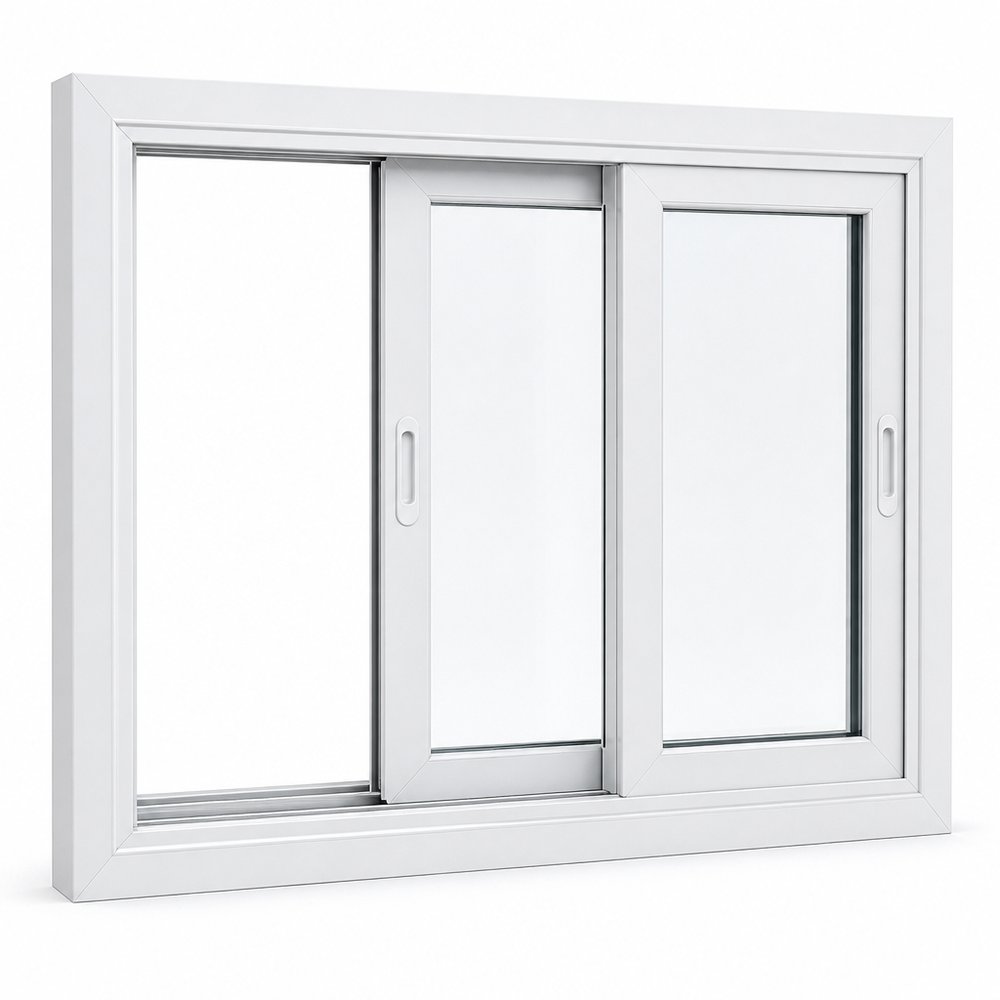
Planning a Commercial or Villa Project?
Send your window schedules or architectural CAD drawings to the OPPGATE engineering team for a prompt, certified quotation and structural review.
Request an Engineered Quotation