
- Edge clearance, face clearance and bite do three different jobs; a rebate that gets one of them wrong usually fails in a way that points at the glass instead of the frame.
- Setting blocks carry the dead weight of the unit and belong at the quarter points of the bottom edge, clear of the weep path; a block sitting over a drain is a dam against the edge seal.
- A drained and ventilated rebate only works when the cavity is compartmentalised, because pressure equalisation is a property of a closed volume, not of a slot cut in a bead.
- A snap-in bead held by gasket friction is a retention risk on any elevation where design suction governs, and bead loss is one of the few glazing failures that becomes a safety issue immediately.
- Flexible PVC gaskets and some silicone sealants are an incompatible pair through plasticiser migration, so the rebate specification has to name the combination rather than leave it to the factory.
- Product standards describe performance of a tested configuration and profile standards describe profiles; neither confirms that the rebate on a delivered frame was assembled to the drawing.
1. The Failure That Gets Attributed to the Glass
Fogging is the complaint that ends a fenestration contract, and it is almost never a glass problem. By the time an insulating glass unit shows visible condensation between the panes, the edge seal has usually been under attack for several seasons, and the conditions that attacked it were set at the drawing stage: how much of the glass edge was covered, what the edge was standing on, whether water could leave the rebate, and whether the unit was free to move or restrained by the frame around it.
Procurement teams spend their attention on the glass make-up, the coating, the gas fill and the spacer, because those are the items that appear in a comparison table. The rebate is a few millimetres of geometry that nobody photographs, and it is where the most sensitive part of the product meets weather, structure and wind at the same time. An insulating glass unit is a composite: a primary seal that limits moisture vapour transmission, a secondary seal that carries structural and mechanical load, and a spacer that holds the two panes apart. All three are at their most vulnerable within roughly the first fifteen millimetres from the glass edge, which is precisely the strip a glazing bead covers and a gasket presses on.
That produces a diagnostic trap. A failed unit is returned to the glass supplier, the supplier finds an intact unit when it is tested in isolation, and the frame is never examined. The useful question at that point is not which glass was specified but how the glass was held: was the edge resting on a hard surface, was the bottom of the rebate holding water, was the bead fixed or merely clipped, and did the sealant at the interface still adhere to anything.
The sections below follow the build sequence rather than the drawing: clearances, blocks, drainage, bead, chemistry, and then the way the detail changes with the opening type.
2. Three Clearances That Get Confused: Edge, Face and Bite
Three dimensions in a glazing rebate are routinely used interchangeably in conversation and are not interchangeable in function. Edge clearance is the gap between the glass edge and the base or back of the rebate. Face clearance is the gap between the glass face and the side wall of the rebate. Bite is the width of glass face covered by the bead or gasket on each side.
Edge clearance does three jobs at once. It gives the pane room to expand, it lets water reaching the rebate pass the glass edge instead of being trapped against it, and it keeps the glass edge from bearing on the frame. A pane set hard against the rebate base puts the edge seal into compression against a hard surface through every thermal cycle, and it seals the bottom of the rebate into a trough at the same time. The clearance is a few millimetres, and it is a clearance rather than a bearing surface: a frame that has been built slightly small, or a unit ordered at the top of the glass tolerance, can consume it entirely without anyone noticing at assembly.
Face clearance has two functions. It allows the pane to deflect under wind without touching the rebate side wall, and it provides the space the gasket has to bridge. Too little clearance and the pane is point loaded at installation, which shows up later as a crack originating at an edge. Too much and a compression gasket cannot develop its designed contact width, so the weather line becomes nominal.
Bite is what retains the unit and what defines the weather line. It has to be sufficient for the design suction and generous enough that a small assembly error does not reduce it below the minimum on one side. Bite that varies around the perimeter, for example a deep bite on three sides and a shallow one where the frame is slightly out of square, is a retention problem before it is a cosmetic one.
| Dimension | Between | Primary job | Typical failure when it is wrong |
|---|---|---|---|
| Edge clearance | Glass edge and rebate base | Movement, drainage past the edge, no hard bearing | Edge chip or crack, water held against the edge seal, fogging |
| Face clearance | Glass face and rebate side wall | Deflection room, gasket bridging | Point loading at installation, gasket that never seals |
| Bite | Glass face and bead or gasket cover | Retention under suction, weather line | Glass walk, bead loss, water reaching the primary seal |
The practical consequence is that these dimensions cannot be checked from a catalogue. They are set by the profile, the bead, the gasket and the fabrication tolerance together, and the only way to confirm them is to measure a finished frame at the four mid-points and at the corners.
3. Setting Blocks: What Carries the Glass, and What Dams the Drain
The dead weight of a glazed unit is carried by setting blocks, not by the gaskets, not by the sealant and not by the bead. This is easy to state and frequently ignored in the factory, where a pane that is pressed evenly into a gasket feels adequately supported.
Position. For a rectangular pane in a fixed or opening frame, the convention is a pair of blocks on the bottom edge placed at roughly the quarter points of the width. That position puts the load into the frame where the section is stiff, keeps the bottom edge from bowing between supports, and leaves the centre of the sill free for drainage. Wider panes need additional blocks, and the spacing should come from the glazing supplier rather than from habit. Blocks at the corners are the wrong answer twice over: they concentrate load within the zone where the edge seal is most vulnerable, and they sit exactly where the drainage path wants to be.
Length and hardness. A block needs enough bearing length to avoid crushing the section it sits on, commonly in the order of a hundred millimetres and not shorter than the glass thickness. Hardness matters more than buyers expect. A soft block creeps under permanent load, the pane settles, the edge clearance closes at the bottom and opens at the top, and the bead line becomes uneven. A block that is too hard and too small is a point load. The material also has to be non-staining and compatible with the sealant it touches: a suitable elastomer, not timber offcuts, not bitumen-impregnated strip, and not a piece of PVC with plasticiser in it.
Head blocks. Short blocks at the head of an opening sash are not carrying load; they stop the pane walking in its rebate under repeated wind pressure and door slam. They are often omitted because they have no structural role, and their absence shows up as a pane that has migrated a few millimetres after a season, with the bite reduced on one side.
The drain the block must not block. A setting block placed across a weephole is a dam. Water arriving at the bottom of the rebate has nowhere to go, stands against the edge seal, and in a freezing climate expands there. The correct sequence is to establish where the water leaves before deciding where the blocks go, not the other way round. In a workshop that assembles to a standard position without reading the drainage detail, this is one of the most common errors, and it is invisible once the bead is on.
4. Sealed, Drained, or Drained and Ventilated
Glazing rebates fall into three families, and the choice between them is a design decision that has to be made before the profile is ordered rather than resolved on site with a cartridge gun.
The sealed rebate relies on the outer seal to keep water out of the rebate entirely. It reads well on a detail drawing and performs poorly over a design life, because a sealant bead behind a glazing bead is a maintenance item that nobody maintains. Once the outer seal is breached, there is no exit path, and the water that entered stays in contact with the edge seal until it finds its way through. The failure is slow, so it is attributed to the glass.
The drained rebate accepts that some water will arrive and provides a route out at the lowest point, typically slots or weepholes through the bead or the frame, usually with a baffle to stop wind-driven water tracking inward through the same opening. The detail only works if the lowest point of the rebate really is the lowest point. A rebate machined level, or one that falls slightly inward because the frame is installed out of level, holds a shallow puddle for as long as the weather keeps supplying it.
The drained and ventilated rebate adds an inlet near the head so the cavity behind the bead sits at, or close to, external pressure. The mechanism is worth stating plainly: wind-driven rain crosses an opening because of a pressure difference across it. If the cavity is pressure equalised, that difference across the outer seal falls, and less water is driven in to be drained out. The ventilation path only performs that function if the cavity is compartmentalised. In a continuous glazing channel running the full perimeter, air entering at the head circulates through the whole channel and the bottom of the rebate still sees the pressure of the entire volume, which is why ventilated systems with no compartments often test no better than drained ones.
For a specification, this means naming the family, the outlet location, the baffle, and the compartment arrangement, and then checking that the factory actually built compartments instead of leaving a continuous channel. Silicone applied to every joint in the rebate is not an alternative to drainage. It is usually a way of covering the absence of drainage, and it removes the exit path at the same time.
5. The Bead: Retention Under Suction and the Snap-In Trap
On the windward face the design case is pressure; on the leeward and side faces it is suction, of similar magnitude and higher near corners. The glazing bead is what resists suction on the interior side of the weather line, and it is the component most often selected for speed of assembly rather than for retention.
A snap-in bead held by the friction of a co-extruded lip depends on the fit of a small feature and on gasket compression that relaxes over time. Under repeated suction, thermal cycling and the small impacts of normal use, that lip wears and the bead creeps outward. The consequence is not cosmetic. A bead that releases on an upper floor is a falling object, and a bead that creeps reduces bite progressively until the unit is retained mainly by the gasket. A mechanically fixed bead, screw-fixed at defined centres or locked with a feature that needs a tool to release, is the version that survives a design life on an exposed elevation.
Three details decide whether the fixing works. First, the screw must land in a wall thick enough to develop pull-out resistance; a self-tapper into a thin decorative cover gives almost none, and the answer is a bead carrier or a reinforced zone rather than a longer screw. Second, long aluminium beads move with the frame, so end clearances and joint positions have to allow for that movement without the bead going into compression against the jamb. Third, the fasteners themselves are exposed at the most humid point of the assembly, so their corrosion class has to match the environment rather than the standard stock item.
The choice between glazing tape and a gasket belongs in the same decision. Tape gives a controlled thickness and a defined seal line along the full length and is difficult to apply badly; a gasket is faster and depends on a clean rebate and properly mitred corners. The corner joint of a gasket is the classic leak path in an otherwise sound rebate, and it is the first place to inspect on a delivered frame.
6. Compatibility at the Interface: Plasticiser, Cure Chemistry and Sequence
The rebate is where four materials meet: glass, aluminium or PVC, a gasket or tape, and a sealant. Compatibility between them is a materials question that a factory is not equipped to answer and a buyer rarely asks, which is why it fails quietly.
Plasticiser migration. Flexible PVC gaskets contain plasticiser that migrates into adjacent silicone sealant over time, softening the sealant and destroying its adhesion to the glass and the frame. The joint looks intact and has stopped sealing. The same migration stains light-coloured surfaces and can affect the coatings on spacers where the two are in contact. The specification answer is to name the gasket material and the sealant together and ask the sealant supplier to confirm the combination, rather than approving each item separately.
Cure chemistry. Acid-cure silicone releases acetic acid as it cures, which is aggressive towards some metallic coatings and towards other sealants in the same joint. Neutral-cure sealants are the normal choice at a glazing interface for that reason, but the label on the cartridge is not evidence: the factory needs the technical data sheet for the specific product, not the family name.
Sequence. Sealant applied to a damp, dusty or frozen rebate adheres to nothing, and a primer that was specified but skipped leaves the same result with no visible sign. The order of operations also matters in the other direction: a sealant applied as a full bed in a rebate designed to drain blocks the drain and converts a drained system into a sealed one, with the added disadvantage that the water now has a longer residence time at the edge seal.
None of this is exotic. It is a list of three things to write into the purchase specification and two things to look at during a factory visit, and it addresses failures that are otherwise diagnosed years later as defective glass.
7. How the Detail Changes With the Opening Type
The same principles produce different details depending on how the sash moves, because the number of drainage planes and the way the rebate travels change what the water can do.
Fixed glazing is the simplest case: one rebate, one drainage plane, outlets at the sill. Most of the risk is eliminated by geometry alone, which is why fixed lights rarely fail and why the failures that do occur concentrate at the sill where the water actually arrives.
Casement, tilt-and-turn and awning sashes introduce two rebates and therefore two drainage planes: the sash rebate drains to the outside of the sash, and the frame rebate drains below it. The sash outlets must line up with the frame drainage path in the closed position, and the sash must discharge outside the frame gasket line rather than onto it. A sash that drains into the frame cavity is a water supply, not a drain.
Sliding sashes cannot rely on compression at all, so the rebate has to assume that water arrives. Water crosses the interlock and is handed from the inner track to the outer one; the bead on a moving sash carries vibration as well as suction, and the gasket at the interlock is a wiping seal, not a pressure seal. Retention details that are adequate on a fixed light are marginal on a large slider.
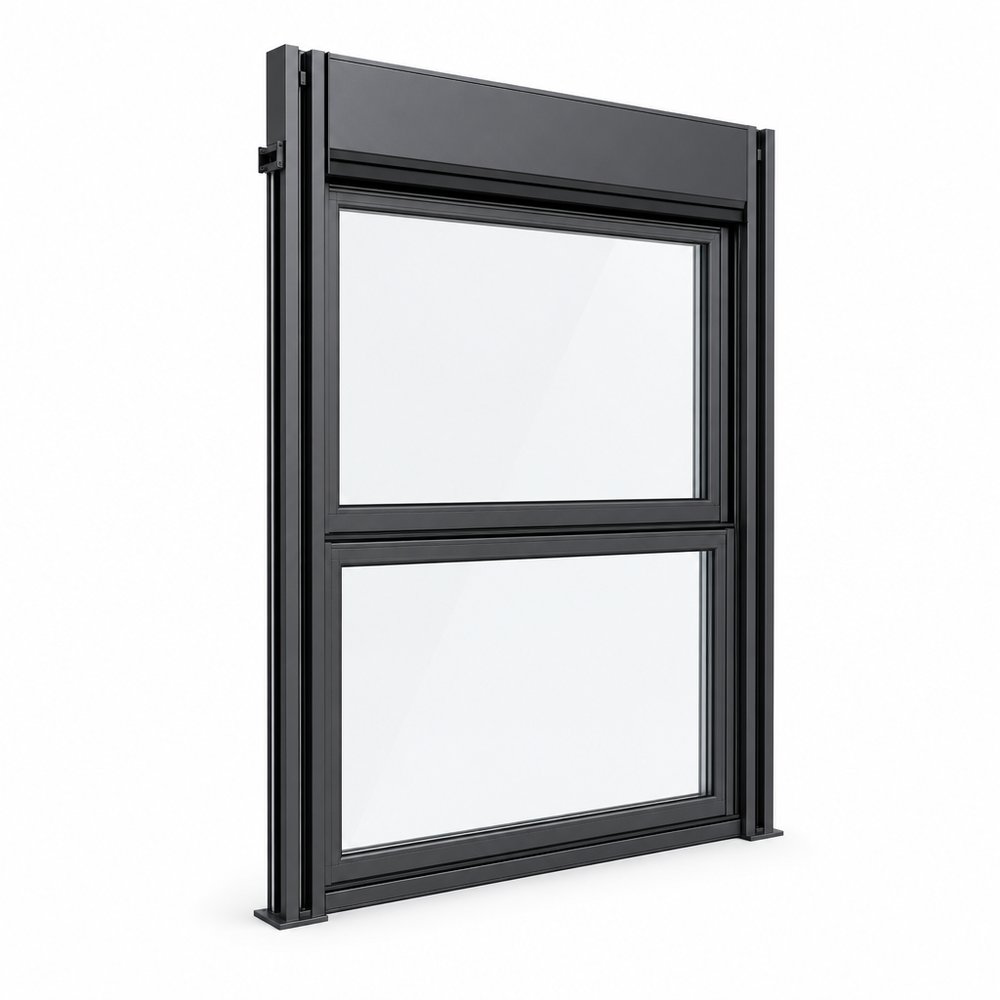
Vertical lifting windows concentrate the problem in the bottom rail, which is effectively a trough that travels. The rebate has to drain the head section and the fixed glazing separately from the travelling sash, the sill track has to discharge below the lowest position of the sash, and the head box needs its own drainage and ventilation because it collects water on the outside face and cannot rely on the sash to keep it out. The studio product view above shows the arrangement in question: a fixed head section, a lower glazed sash running in side tracks, a projecting head box and a flat sill rail, with the bead line visible around both panes. The bead and gasket detail on the travelling lower sash is the part of that assembly that does the most work and gets the least attention in a specification.
| Opening type | Drainage planes | Where the detail usually fails |
|---|---|---|
| Fixed light | One, at the sill | Sill that falls inward, block over the outlet |
| Casement, tilt-and-turn, awning | Two: sash and frame | Sash outlets not aligned with frame drainage, discharge onto the frame gasket line |
| Sliding | Two tracks plus the interlock transfer | Inner track with no exit, bead retention on a vibrating sash |
| Vertical lifting | Head section, fixed glazing, travelling sash | Bottom rail acting as a trough, sill track discharging above the sash travel |
8. What to Write Into the Specification, and What to Check in the Factory
Almost everything in this guide can be converted into a short set of clauses, and each clause corresponds to something that can be inspected on a finished frame in a few minutes. That pairing is what makes the detail enforceable rather than aspirational.
| Clause | What to write | Why it matters |
|---|---|---|
| Edge clearance | Nominal value and minimum, measured at four mid-points and four corners | Protects the edge seal from bearing and keeps a path past the glass edge |
| Setting blocks | Material, hardness, length, position at quarter points, clear of outlets | Carries dead load without creep and without damming the drain |
| Head blocks | Required on all opening sashes, position stated | Prevents glass walk and progressive loss of bite |
| Drainage family | Drained and ventilated, outlet type and location, baffle, compartment arrangement | Makes pressure equalisation a build requirement rather than a claim |
| Bead retention | Mechanical fixing, centres, fastener corrosion class | Resists design suction and removes the falling-object risk |
| Interface materials | Gasket material and sealant named together, compatibility confirmed by the sealant supplier | Prevents plasticiser migration and adhesion loss |
| Sequence | No sealant in the drainage path, primer as specified, dry substrate | Stops a drained rebate being converted into a sealed one |
Factory checks that cost an hour. Pull one bead on a finished frame and look at what is behind it: block position, block material, whether a block sits over an outlet, and whether the rebate is clean. Pour water into the bottom of the rebate and watch where it leaves; it should exit at the exterior within seconds and must not appear at the inner gasket line. Measure bite at the mid-points and at the corners on the same frame, because variation around the perimeter is the signature of a frame that is out of square. Check that the bead fixings are present and that the fasteners are the specified grade rather than whatever was in the bin. Finally, confirm that the insulating glass unit label matches the specified make-up, since the rebate detail and the unit specification are usually approved in different documents and reconciled in neither.
What the standards do and do not cover. EN 12488 sets out assembly rules for glazed assemblies, including clearances and setting arrangements, and is the right reference for the geometry. The EN 1279 series addresses insulating glass unit construction and its long-term behaviour, including the edge seal. ASTM E330 addresses the structural performance of a window assembly under a uniform pressure difference. EN 14351-1 sets out the performance characteristics and classification of windows as products. Each of these is scoped to what it measures: a classification applies to the configuration that was tested, and a product standard describes performance rather than workmanship. None of them confirms that the rebate on a particular frame delivered on a particular day was assembled to the drawing with the blocks in the right place. That remains an inspection question, and it is the cheapest one a buyer can ask before a container is loaded.
Explore OPPGATE Aluminum Windows
Thermal break aluminum sliding, casement, tilt-and-turn and panoramic window systems for global residential and commercial projects.
View All Aluminum Windows Models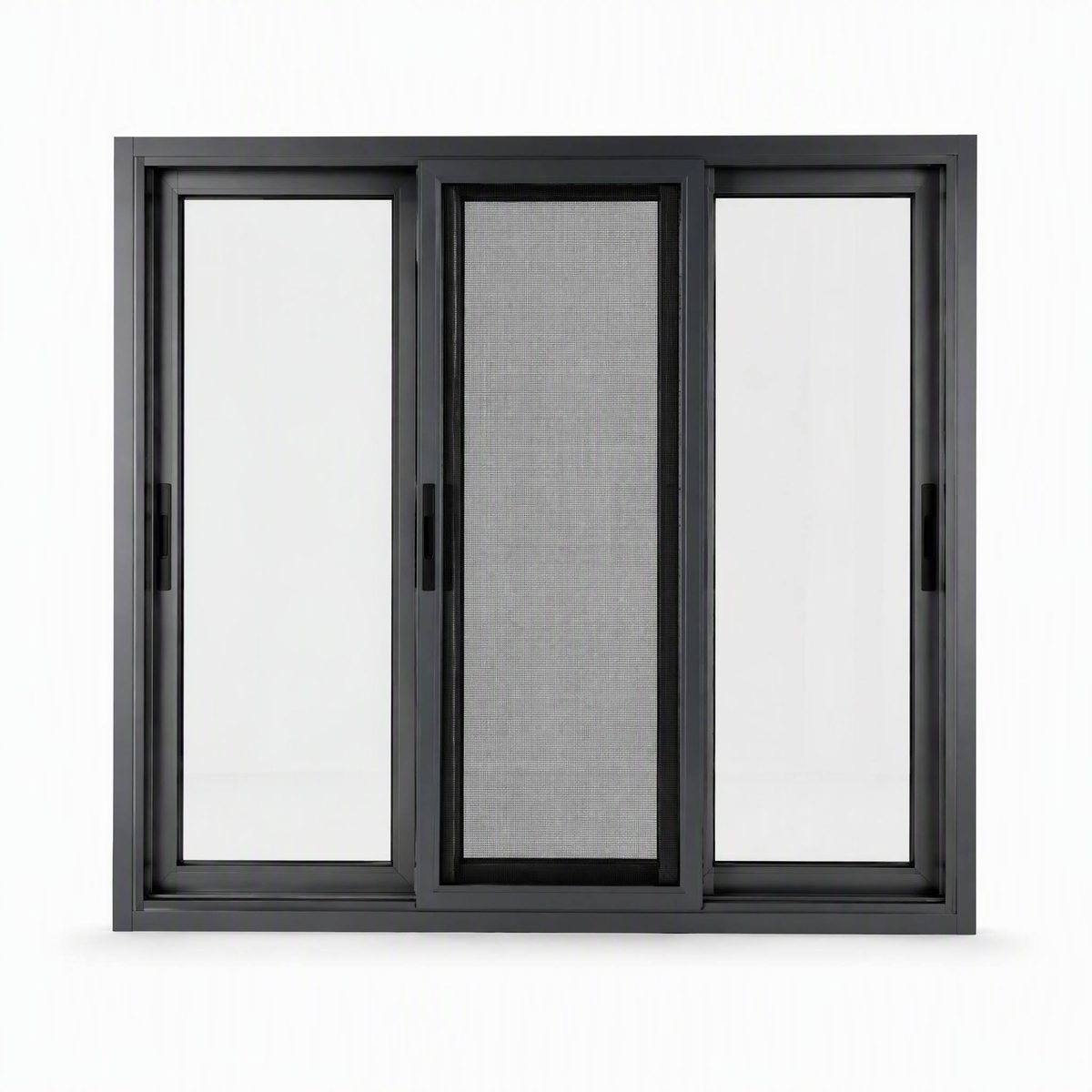
Planning a Commercial or Villa Project?
Send your window schedules or architectural CAD drawings to the OPPGATE engineering team for a prompt, certified quotation and structural review.
Request an Engineered Quotation