

- A compression gasket is a spring: interference, hardness and recovery decide performance, and a material name on its own specifies almost nothing.
- Two EPDM compounds of identical hardness can differ by a factor of two in compression set, which is why the tested recovery value matters more than the polymer family.
- Silicone buys temperature range and recovery at the cost of tear strength and higher water vapour transmission, so it is a weather seal and not a moisture barrier.
- Welded TPV corners remove the weakest joint in the seal, but the material creeps under sustained heat and load, so it is a moderate-climate choice.
- Most water ingress traced to gaskets is a drainage or geometry failure: a seal that bridges a weep path turns a drained system into a reservoir.
1. A Gasket Is a Spring, and It Should Be Specified Like One
Weatherseals are the cheapest line item on a window schedule and the one most often left entirely to the fabricator. That is a procurement mistake, because the gasket is the only component in an opening that has to do four jobs at once: keep air out, shed water, interrupt the acoustic path, and recover its shape thousands of times across a service life of twenty-five years or more. A coating protects a profile. A gasket protects the building envelope.
Mechanically, a compression gasket is a spring. It is deflected when the sash closes and must push back hard enough to hold contact against the frame under wind load, thermal movement and hardware settlement, but not so hard that the sash becomes difficult to operate or the frame distorts. Three variables decide whether it works: the interference designed into the groove, the hardness of the compound, and the material's ability to recover after being squeezed. A supplier who quotes only EPDM gasket has specified perhaps a tenth of the requirement.
Most commercial aluminium systems use three sealing lines. An external rain screen takes the kinetic energy out of driving rain, a middle chamber is vented and drained so that it can equalise pressure with the outside, and an internal air seal does the actual airtightness work. These lines usually use different profiles and increasingly different materials. Confusing a wiping seal with a compression seal, or standardising on one hardness everywhere because it simplifies stock, is one of the most common reasons a system that tested well in a laboratory performs badly on a wet, windy site.
2. EPDM: The Default Choice and the Three Ways It Fails
Ethylene propylene diene monomer dominates aluminium fenestration for sound reasons. Its polymer backbone is saturated, so it resists ozone, ultraviolet light and general weathering far better than natural or nitrile rubber, and it holds elasticity from well below freezing to around the boiling point of water. It is inexpensive, available in dense, sponge and co-extruded forms, and easy to colour-match. For most European, North American and temperate Asian projects it is the correct default.
Its weaknesses are specific and predictable. The first is hydrocarbon resistance. EPDM swells and softens on contact with oils, bitumen, many solvent-based sealants and some mould release agents. A sash wiped down with an oil-based cleaner, or a gasket laid against fresh bitumen flashing, can lose its section within a season. Solvent-borne glazing tapes and certain lubricants attack it in the same way, which is why cleaning regimes belong in the O&M manual and not only in the marketing brochure.
The second is compression set under heat. EPDM is a thermoset, cross-linked by vulcanisation, and every compound trades some elastic recovery for hardness and tensile strength. A low-cost compound with high filler loading takes a permanent set where the sash presses it, and once that set is taken the seal line becomes a gap. This is why two gaskets of identical hardness can behave completely differently after three summers on a south facade, and why compression set tested to ISO 815-1 at a temperature representative of a dark frame in summer tells a buyer more than the polymer name on the datasheet.
The third is ozone cracking under tension. EPDM resists ozone well, but a gasket stretched around a sharp corner, or spliced and then installed under load, concentrates stress at that point; small surface cracks then grow into the body of the profile. Corner geometry is therefore a material decision as much as a detailing one, and a cut corner cannot be rescued by a better compound.
Two cosmetic behaviours are worth flagging at specification stage. Black EPDM chalks as surface waxes migrate, which shows on light render and pale stone, and in warm humid climates those waxes can support mould growth on dust that settles in the rebate. Neither affects the seal, but both generate snagging lists that arrive on the contractor instead of the manufacturer.
3. Silicone: Temperature Range and Recovery, Bought With Tear Strength
Silicone rubber is built on a silicon-oxygen backbone rather than a carbon chain, which is why it keeps its elasticity across a range EPDM cannot reach. That matters in roof glazing, skylights, dark metal frames that reach high surface temperatures in direct sun, and at the other extreme in cold-store or high-altitude work. It recovers from compression better than EPDM at temperature, and it does not chalk.
The trade is mechanical. Dense silicone has lower tensile and tear strength than EPDM, so it is more easily damaged in transit or by a glazier dragging a sash across a sill, and it is more prone to nicks at the nose of a profile. Sponge silicone is softer and more conformable, which makes it attractive at uneven interfaces, but it is not a structural spacer and should never carry glass.
Silicone is also permeable. It transmits water vapour and some gases more readily than EPDM, which is why it is not used as the secondary seal of an insulating glass unit, and why a silicone gasket should not be treated as the vapour control layer in a warm humid climate. In a glazing rebate it is a weather seal, not a moisture barrier. A designer who substitutes it for a proper vapour-tight detail will find condensation inside the assembly rather than on the glass.
Two practical cautions follow. Silicone attracts dust and holds it, so pale silicone on a city facade looks soiled unless the profile sheds water across it. And silicone cannot be painted: overspray from a silicone lubricant or sealant causes fisheyes in any later coating repair on adjacent aluminium. Where touch-up painting is likely, keep silicone out of the immediate detail or mask it completely. Cost is typically a multiple of EPDM, justified by temperature and recovery rather than by prestige.
4. TPE and TPV: Where Thermoplastics Earn Their Place, and Where They Do Not
Thermoplastic elastomers, and specifically thermoplastic vulcanizates in which a cross-linked EPDM phase is dispersed in a polypropylene matrix, combine rubber-like behaviour with thermoplastic processing. The processing is the point. A TPV gasket can be co-extruded onto a rigid PVC or aluminium profile, and mated frame corners can be welded and dressed rather than mitred and glued. On high-volume casement and tilt-and-turn lines, welded corners remove the weakest joint in the seal and take a variable out of the factory.
The limits are thermal and rheological. TPV softens and creeps under sustained elevated temperature, so it is a poor choice on dark unshaded frames in hot climates, or on heavy doors that compress the same area of gasket for years. Compression set is generally worse than a well-formulated EPDM above moderate service temperatures, and the material is less forgiving of permanent deflection. Specify it where welding, colour consistency and recyclability matter, and where the temperature exposure is moderate.
Brush or pile weatherstrip belongs in a different category altogether. It is a wiping seal for sliding elements: polypropylene pile, sometimes with a fin, held in a carrier. It reduces air infiltration and rattle, and it sweeps dust from the track, but it cannot be compressed into a watertight line and should never be presented as the water seal of a sliding system. Sliding windows and doors manage water through the track, with raised thresholds, weirs, drainage slots and pressure-equalised chambers, while pile does air and acoustic duty. A specification that asks a brush seal to stop wind-driven rain will fail at the first storm, and no amount of gasket density compensates for a track with no drainage.
5. Compression Set, Groove Geometry and the Joints Nobody Inspects
Seal failures are usually geometry failures wearing a material costume. A dense gasket needs a defined interference, of the order of fifteen to twenty-five percent of its free height, enough to load the seal but not so much that the compound is crushed beyond recovery. The groove must accept the material displaced under compression. Over-filling a rebate forces the gasket to extrude into the drainage path and blocks the very route that keeps the chamber dry.
Corners matter more than straights, and they are the part of the seal nobody inspects. A mitred and glued joint introduces an adhesive line that is stiffer than the surrounding rubber and often less weather-resistant; a vulcanised or welded corner is closer to continuous material. Either way the joint should sit on a compression face rather than the weather face where water collects, and it should be checked on every unit rather than sampled. Metal corners that are not deburred will cut a gasket during assembly, and that cut surfaces at the first pressure test, not at the first delivery.
The drainage path deserves equal attention. In a pressure-equalised system, water that passes the outer seal must be able to leave through slots or weirs without reaching the inner seal. A gasket that bridges a drainage slot, or a bead of site sealant applied across a weep hole, converts a drained system into a reservoir. This is among the most frequent causes of water ingress on completed buildings, and it is invisible on the drawing that was approved.
Then there is tolerance stack-up. Extruded gaskets are produced to the dimensional tolerances for rubber products set out in standards such as ISO 3302-1, and the frame is fabricated to its own tolerances. Where a tight rebate meets the high end of tolerance on both, the gasket is over-compressed at one point and under-compressed a metre away. A specification should state whether the design interference assumes nominal or worst-case dimensions, because the two answers produce different groove widths.
6. What the Gasket Contributes to a Test Report, and What It Cannot Fix
Laboratory performance is declared for the window assembly, not for its components. Under EN 14351-1 the manufacturer declares air permeability, watertightness and wind resistance against the classifications in EN 12207 and EN 12208, tested by the methods in EN 1027 and EN 12211. The North American route declares against ASTM E283 for air leakage, ASTM E331 for water penetration and ASTM E330 for structural performance. In every case the specimen includes frame, glass, hardware, drainage detailing and gaskets as one system.
That has two consequences for procurement. A test report cannot be transferred between systems: a report issued for one profile with one gasket set does not cover the same profile with a cheaper seal, a different corner joint or a shallower rebate. And the gasket is a variable inside the test, where small changes to hardness or interference can move a result by a class. When a supplier offers a sealing upgrade, the useful question is which report covers it, at which specimen size, and with which hardware compression.
Acoustics behave the same way. Airborne sound reduction measured to the ISO 10140 series and rated under EN ISO 717-1 is dominated by the glass, but a linear leak at a gasket joint caps the achievable rating regardless of the glazing specification. An undercut door, or a compression gasket that has taken a set and no longer touches, is an acoustic short circuit, and no laminated pane compensates for it.
7. Ageing by Environment: Coastal, Tropical and Cold-Climate Detail
Environmental classification should drive the gasket specification as much as it drives the hardware. On coastal and marine sites, classified for corrosivity under ISO 9223, the chloride load attacks metal components and indirectly the elastomer: salt crystals lodge in the gasket surface and abrade it as the sash moves, and corrosion products from adjacent steel stain and degrade the seal interface. The gasket itself does not corrode, but the detail must be designed so that salt can be washed out rather than trapped behind it.
Accelerated ageing is the only practical way to compare compounds before installation, and the relevant methods are long established: heat ageing to ISO 188, resistance to liquids to ISO 1817, compression set to ISO 815-1, and ultraviolet exposure through methods such as ASTM G154 for non-metallic materials. Salt spray testing to ASTM B117 is a metal test and says very little about an elastomer; a datasheet defended with salt spray hours is answering a different question. Dense elastomeric compression gaskets and setting blocks for glazing are also covered by material specifications such as ASTM C864, cellular preformed gaskets by ASTM C509, and EN 12365-1 provides a European performance and classification framework for gaskets and weatherstripping used in doors, windows, shutters and curtain walling.
Cold climates stress the other end of the curve. EPDM stiffens below freezing, and a gasket that has taken a compression set leaks more in winter, when the sash contracts and the seal line opens. Silicone keeps flexibility at lower temperatures, which is one of the few clear material arguments for it outside hot facades. Tropical climates add biological pressure: organic dust and condensation in a shaded rebate support mould, and a profile that holds water will grow it whatever the compound.
8. A Specification Clause That Can Actually Be Checked
A clause that says only EPDM weatherseal, black cannot be verified at goods-in and leaves the fabricator free to buy on price. A workable clause names the compound family and grade, the hardness and its test method, a compression set limit at a stated temperature and duration, the acceptable corner joint method, and the ageing test the compound must have passed. It should also require the gasket to be supplied as a replaceable extrusion with a published part number, because a seal that cannot be renewed in fifteen years is a maintenance liability written into the building.
| Material | Temperature range | Compression recovery | UV and ozone | Corner joint | Relative cost | Best fit |
|---|---|---|---|---|---|---|
| Dense EPDM | Wide; copes with temperate and cold climates | Moderate; depends on filler quality and heat exposure | Very good | Vulcanised or glued mitre | Low | Perimeter seals on casement and tilt-turn windows; the general default |
| Sponge EPDM | As dense EPDM, at much lower load | Moderate to poor under high deflection | Very good | Glued mitre | Low | Uneven interfaces and secondary seals where load must stay low |
| Dense silicone | Widest; high surface temperatures down to low-temperature service | Good recovery, retained at temperature | Excellent; does not chalk | Glued mitre; welding not possible | High | Roof glazing, dark frames, cold-climate and hot-facade work |
| Sponge silicone | Widest | Good, but low load capacity | Excellent | Glued mitre | High | Conformable seals at irregular interfaces; never load bearing |
| TPV / TPE | Moderate; limited by creep under sustained heat | Weaker than good EPDM above moderate temperatures | Good | Welded and dressed | Medium | High-volume lines where welded corners and colour consistency matter |
| Pile brush | Moderate | Not applicable; wiping seal | Good | Carrier joint | Low | Sliding sashes for air, dust and rattle control only |
At incoming inspection, check the extrusion for splice count, durometer hardness against the specified value, dimensional tolerance and surface defects, and inspect corner joints on the first article rather than at the end of the order. Store coils in the dark, unstrained and off the floor. Elastomers age in storage, and a coil left compressed under a pallet for a year will not recover on installation, which then reads on site as a manufacturing defect.
9. Questions Worth Asking Before the Order Is Placed
Gasket decisions are cheap to change on a drawing and expensive to change after the first container. These are the questions that separate a supplier who has engineered a seal from one who has bought a length of rubber.
- Which test report covers this exact gasket, profile and hardware combination, and at which specimen size was it issued?
- What compression set value was measured, at which temperature and duration, and to which edition of ISO 815-1?
- How are corners jointed, and is the joint on a compression face or a weather face?
- Does the groove geometry assume nominal or worst-case extrusion and fabrication tolerances?
- Can the gasket be replaced in service as a continuous extrusion, and is the part number published in the O&M documentation?
- Which cleaning agents and lubricants are compatible with the compound, and which will attack it?
- For coastal sites, what is the wash-down recommendation, and does the drainage detail let salt leave the system?
None of these questions requires a laboratory. They require a supplier who knows which material is in the rebate, why it was chosen, and what happens to it in year ten. On a facade package carrying hundreds of openings, that difference in specification discipline is usually worth more than the difference in gasket price.
Explore OPPGATE Aluminum Windows
Thermal break aluminum sliding, casement, tilt-and-turn and panoramic window systems for global residential and commercial projects.
View All Aluminum Windows Models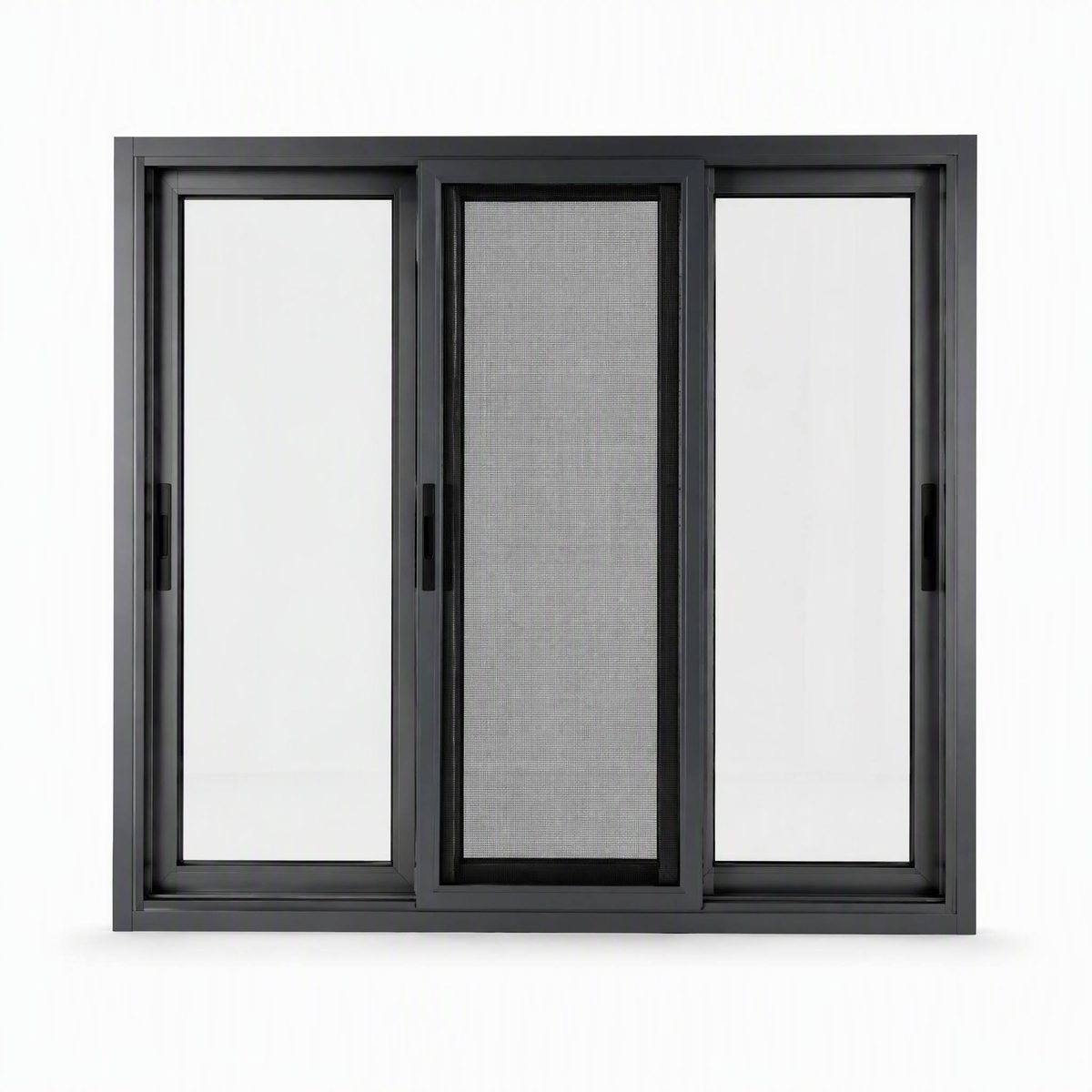
Planning a Commercial or Villa Project?
Send your window schedules or architectural CAD drawings to the OPPGATE engineering team for a prompt, certified quotation and structural review.
Request an Engineered Quotation